
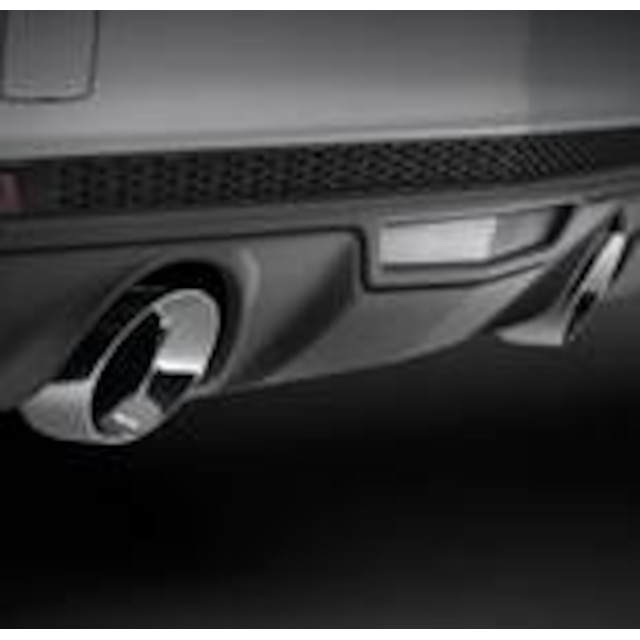

Muffler with Pipes, Clamp, and Hardware

Muffler with Pipes, Clamp, and Hardware

GM Part #84053432

MSRP$1,500.00*

Give your vehicle a throaty purr with a Cadillac Accessories Exhaust System Kit.

  • Gives your vehicle a throaty purr
  • Reduces restrictions in your exhaust pipes and expands the diameter of stock pipes
  • Allows your engine to breathe better

About this product

Give your vehicle a throaty purr with a Cadillac Accessories Exhaust System Kit. This kit reduces restrictions in the exhaust pipes and expands the diameter of stock pipes, allowing your engine to breathe better, and is made from T-304 stainless steel. This Cadillac accessory can help to personalize, customize, or optimize the capability of your vehicle for your lifestyle and use.

Warning WARNING: Cancer and Reproductive Harm - www.P65Warnings.ca.gov

  • Gives your vehicle a throaty purr
  • Reduces restrictions in your exhaust pipes and expands the diameter of stock pipes
  • Allows your engine to breathe better

Gasket Or Seal IncludedNo
Tail Pipe Outlet Outside Diameter2.5 in / 63.5 mm
Tail Pipe Quantity2
Heat Shield AttachedNo
Inlet Inside Diameter2.53 in / 64.26 mm
Muffler ShapeOval
Muffler MaterialStainless Steel
Grade TypePerformance
Catalytic Converter Quantity0
Pipe MaterialStainless Steel
Clamps IncludedYes
Muffler Outlet Quantity1
Muffler Body ShapeOval
Muffler Body MaterialStainless Steel
Tail Pipe Tapered OutletNo
Muffler Flanged OutletNo
Muffler Flanged InletNo
Spring Bolt Kit IncludedNo
Hangers IncludedYes
Hanger TypeWelded Rod
Body Height7.07 in / 179.47 mm
Body Length18.83 in / 478.4 mm
Muffler Quantity3
Muffler Inlet Outside Diameter2.66 in / 67.56 mm
Muffler Inlet Inside Diameter2.53 in / 64.26 mm
Muffler Body Length6.61 in / 167.97 mm
Assembled Length110.05in
Inlet Outside Diameter2.66 in / 67.56 mm
Inlet TypeClamp
FinishNatural

The greater of either the balance of the vehicle's bumper to bumper warranty or 12 months / 12,000 miles

Good Maintenance Practices:

  • Inspect your exhaust system for rust or corrosion.
  • Look for loose parts, disconnected components, failed welds, or damage.
  • Listen for any irregular sound coming from your exhaust system or engine.
  • Be aware of any new vibrations, loss of engine power, or extreme smell of exhaust gas.
  • If you are going to put your vehicle through heavy use, inspect and tighten any loose exhaust components beforehand and inspect afterwards.
  • Be cautious when approaching large bumps, dips in the roads surface, or any hazardous conditions where you could potentially scrape or damage your exhaust system.

Troubleshooting Tips:

  • Uncharacteristically loud sound coming from your exhaust – there could be an exhaust leak, bad catalytic converter, or bad muffler.
  • New vibration, loss of engine power, rumbling noise – if you notice any of these issues while operating your vehicle it could be a hole, exhaust leak, or disconnected exhaust component.
  • Smell of exhaust gas – this can be a serious issue, as any extreme smell of exhaust in the passenger cabin would indicate an exhaust leak that needs to be addressed immediately. Make sure your windows are rolled down to protect yourself.
  • Filling up your gas tank more often – if there is a change in fuel efficiency, have your vehicle checked immediately. If the exhaust is leaking, your engine has to work harder, which requires more fuel.
  • Increased engine noise – your exhaust system keeps the engine noise low, so if there is a leak you are likely to hear a loud rumble from your engine.
  • Rust or corrosion – if you inspect your exhaust system and notice any deterioration from rust or corrosion, it is a sign you might need to replace that part as soon as possible before you run into any problems. Water vapor can collect in your exhaust system, as well as other factors such as rain, snow, salt, and road debris, causing rust/corrosion.
  • Loose or damaged parts and components – shaking and jarring of your exhaust system from potholes or uneven road surfaces could cause your exhaust system to become loose or even damaged. This can combine with other common problems like rust or corrosion and make problems worse. If you notice any loose or damaged parts or components immediately address the issue.

ModelBody StyleTrimYear(s)
ATSBase, Luxury, Performance, Premium2016

Frequently Asked Questions

Yes, upgrading your exhaust system enhances the sound, performance, and style of your stock exhaust system. It reduces restrictions in the exhaust pipes and expands the diameter of stock pipes, allowing your engine to breath better.

Yes, if you notice an exceptionally loud noise coming from your exhaust, new vibration, loss of engine power, rumbling noise from engine, extreme smell of exhaust gas, decreased fuel efficiency, rust or corrosion, or loose or damaged parts. Any of these signs could signify problems with your exhaust system that need to be diagnosed immediately.

Yes, regularly inspect your exhaust system for rust/corrosion, loose parts, disconnected components, failed welds, and damage. Always be aware of any irregular sound, new vibrations, loss of engine power, or extreme smell of exhaust gas. If you are going to put your vehicle through heavy use, inspect and tighten any loose exhaust components beforehand and check for damage afterwards. It is also important to be cautious with large bumps, dips, and hazardous road conditions that could damage your exhaust system.